
🚀 Introducing STEM-Powered Play Kits!
We are thrilled to announce the launch of our brand new STEM-Powered Play circulating collection! Developed by a dedicated committee of regional school librarians and funded by an LSTA grant, this “Library of Things” is designed to redefine the rural school library experience.
We have built 60 comprehensive, hands-on learning kits specifically for grades K-8. These kits are designed to transform your library or classroom from a passive reading space into an active, inquiry-based learning lab.
📦 What is Inside Each Kit?
Every STEM-Powered Play kit is a fully self-contained lesson in a box, structured around three core pillars to blend literacy with interactive discovery:
- High-Interest Non-Fiction Books: Each kit contains carefully vetted, modern non-fiction books that establish the foundational background knowledge for the theme. Our collection spans almost all Dewey Decimal ranges, bringing diverse voices and updated genres directly to your students.
- Durable, Reusable STEM Materials: Students don’t just read—they do! Kits include robust, reusable physical materials for students to conduct experiments, build models, write code, or solve engineering challenges related directly to the books.
- Standards-Aligned Lesson Plans: No prep required! Every kit comes complete with a detailed, ready-to-use lesson plan featuring clear learning objectives, step-by-step instructions, discussion prompts. and activities adaptable for multiple grade levels.
🎯 Themes That Connect to Student Passions
We know that the best way to spark a love for STEM is to connect it to things kids already love. Our kits bridge complex scientific concepts with high-interest topics, featuring themes such as:
- Magnet Mayhem: Exploring Forces & Magnetism – Students will investigate magnetic forces by observing how magnets can attract, repel, and move objects without direct contact.
- Animal Architects: The Science of Habitats – Students will design and test a model of an animal habitat, explaining how the physical characteristics of their design help an animal survive environmental “weather” (wind and rain).
- …and dozens more covering a wide array of scientific, historical, and mathematical concepts!
💡 Why Use Them?
- Resource Equity: Access advanced learning tech and premium non-fiction books that your individual school budget might not otherwise cover.
- Engage Reluctant Readers: The combination of physical items and exciting books has been proven during pilot testing to pull in students who don’t typically engage with traditional library books.
- Turnkey Facilitation: Designed by librarians, for librarians and teachers. You provide the space; the kit provides the engagement.
🚚 How to Reserve a Kit
Because these kits are part of a centralized, circulating model managed by SEDC, borrowing them is incredibly easy:
- Browse the available STEM-Powered Play kits below.
- Check the calendar for availability.
- Reserve your kit for your desired dates by filling out our Google Form for reservations.
- SEDC will handle the logistics to deliver the kit directly to your school and pick it up when you’re done! Or you can pick them up at our office in Cedar City.
Ready to bring hands-on science to life? Head over to our reservation portal and book a kit for your media center or classroom today!
See the kits below!
Science Kits
Please click on the kit name to see the details!
STEM Kit #1: Animal Architects – The Science of Habitats
STEM Kit #1: Animal Architects – The Science of Habitats

Explore the engineering feats of the animal kingdom! Designed by regional school librarians through an LSTA Grant, this kit invites students to act as animal architects by constructing habitats using KEVA planks and natural wood slices. Learners test their structural designs against environmental conditions like wind and rain using hands-on tools, making it an ideal resource for small group exploration, library centers, or classroom SEEd alignment.
STEM Kit #2: Paleontology Explorer
STEM Kit #2: Paleontology Explorer

Unearth the secrets of ancient Earth with the Paleontology Explorer kit! Designed to bring the prehistoric world to life, this hands-on collection features engaging non-fiction texts, dinosaur stencils, matching games, and habitat modeling tools that invite students to examine anatomical traits, reconstruct habitats, and analyze fossil evidence. Developed to support librarian development and student discovery through LSTA Grant funding, this kit directly aligns with Utah SEEd Standard 4.1.3 and High School GEOL.2.1 by guiding young scientists to read the fossil record and understand ancient environments.
Dewey Decimal Topic: 567 – Paleontology / Fossils
STEM Kit #3: Ocean Life – Marine Biology and Ecosystems
STEM Kit #3: Ocean Life – Marine Biology and Ecosystems

Dive into marine biology with this hands-on STEM toolbox designed to explore ocean zones, ecosystems, and aquatic animal adaptations. Featuring realistic ocean animal figures, interactive puzzles, card games, and engaging literature, students conduct active exploration to discover how internal and external structures support survival underwater. Developed to support teacher and librarian curriculum development through LSTA Grant funding, this kit aligns with Utah SEEd Standards 1.2.2 and 4.1.1 to foster deep scientific discovery in member school districts.
Dewey Decimal Topic: 597 – Biology
STEM Kit #4: Insect Anatomy and Life Cycles
STEM Kit #4: Insect Anatomy and Life Cycles

Explore the fascinating world of entomology with STEM Kit #4! Designed for hands-on student exploration, this kit features real encased insect specimens, life cycle figurines, building blocks for engineering body segments, and rich non-fiction texts. Created through LSTA Grant funding to support librarian capacity and station-based learning, this kit directly aligns with Utah SEEd Standards 3.2.1 and 4.1.1.
Dewey Decimal Topic: 595.7 – Biology
STEM Kit #6: Plant and Insect: Growing and Changing
STEM Kit #6: Plant and Insect: Growing and Changing

Investigate the transformative stages of biological growth with STEM Kit #6! Featuring 3D life cycle models, a bilingual Spanish/English interactive kit, and rich non-fiction texts by authors such as Gail Gibbons, students explore patterns of birth, growth, reproduction, and metamorphosis. Funded through an LSTA Grant to elevate school library stations and enhance teacher resources, this kit aligns with Utah SEEd Standards 1.2.1 and 3.2.1. #sedck12
Dewey Decimal Topic: 581 – Biology
STEM Kit #7: Rocks and Minerals: Stories in Stone
STEM Kit #7: Rocks and Minerals: Stories in Stone

Uncover the earth science hidden in everyday geology with STEM Kit #7! Equipped with real rock specimens, a digital microscope, Mohs hardness testing tools, streak plates, and magnetic wands, students engage in hands-on station investigations to identify minerals and analyze physical properties. Supported by LSTA Grant funding to boost media center learning environments and librarian instructional design, this kit aligns with Utah SEEd Standards 2.1.1, 4.1.3, and ESS.2.2.
Dewey Decimal Topic: 552 – Earth Science
STEM Kit #9: Magnetic Mayhem
STEM Kit #9: Magnetic Mayhem
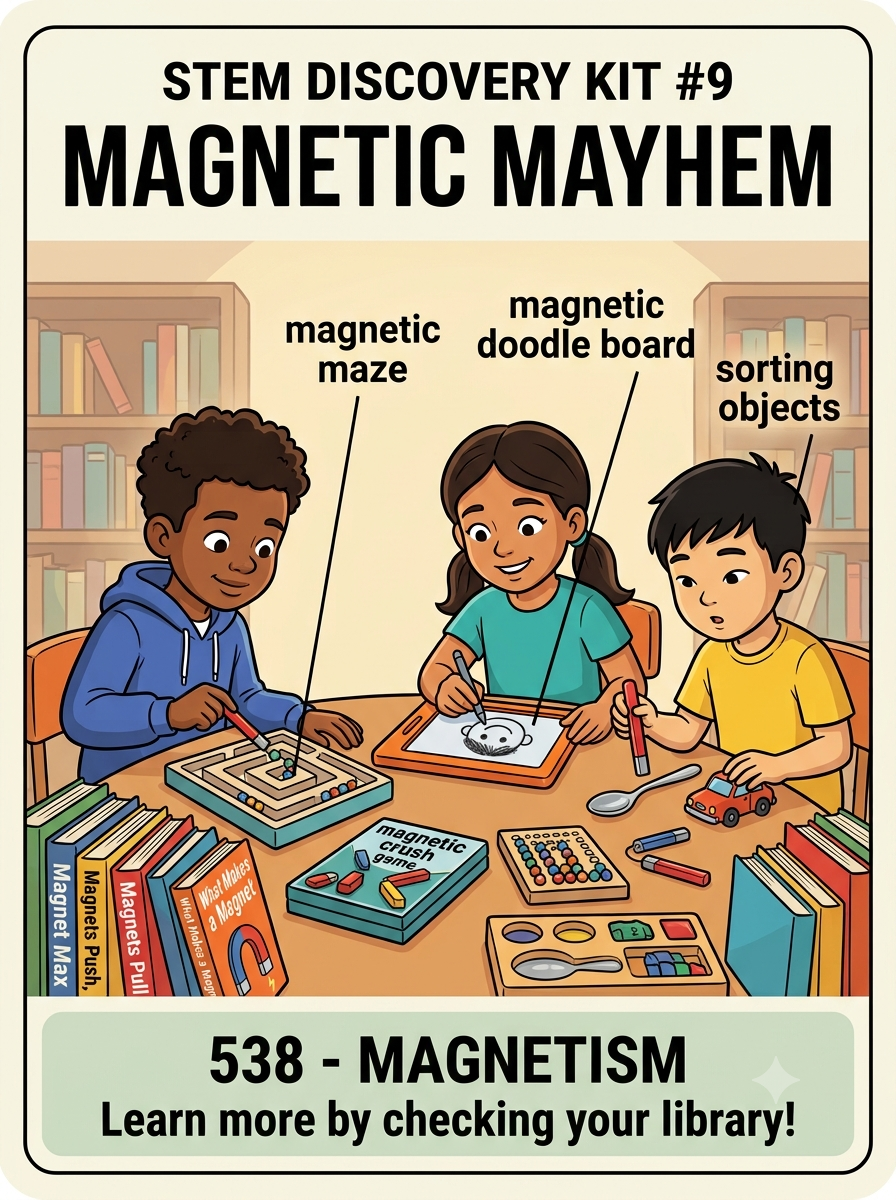
Investigate the invisible forces of physics with STEM Kit #9! Packed with hands-on tools like a magnetic maze, doodle board, bead board, crush game, magnetic science wands, and object sorting materials, students explore how magnetic fields pull, push, and move objects without direct contact. Developed to support teacher capabilities and enrich independent library stations through LSTA Grant funding, this kit directly aligns with Utah SEEd Standards 3.3.1 and 4.3.2.
Dewey Decimal Topic: 538 – Magnetism
STEM Kit #10: Force, Motion, & Balanced Friction
STEM Kit #10: Force, Motion, & Balanced Friction
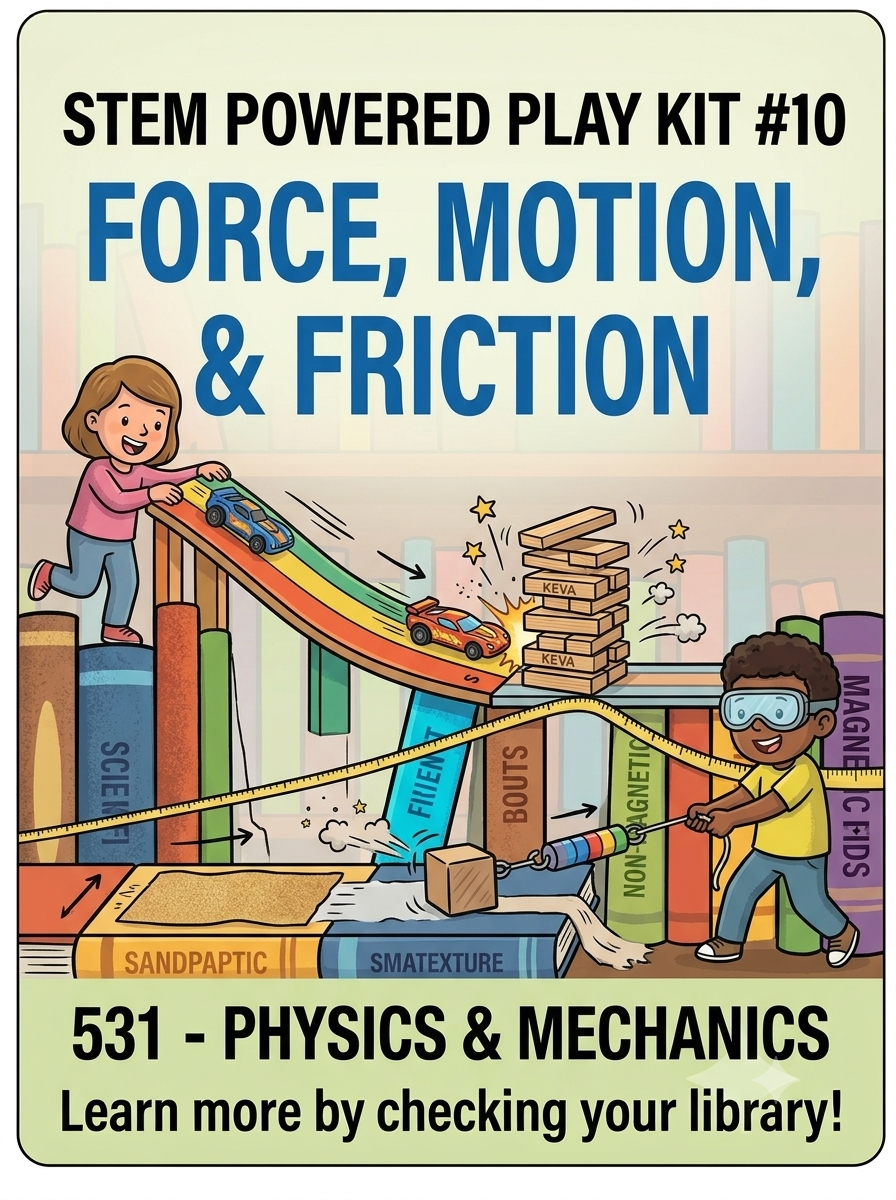
Investigate classical dynamics and surface friction with STEM Kit #10! Packed with hands-on tools like spring scales, multi-surface friction blocks, pull-back friction cars, Hot Wheels tracks, and measuring tapes, students execute controlled investigations to measure balanced and unbalanced forces in Newtons. Developed through LSTA Grant funding to enhance library learning stations and teacher capacity across SEDC districts, this kit directly aligns with Utah SEEd Standard 3.3.1.
Dewey Decimal Topic: 531.11 – Physical Sciences / Classical Mechanics / Dynamics, Force, and Motion
STEM Kit #11: Energy
STEM Kit #11: Energy
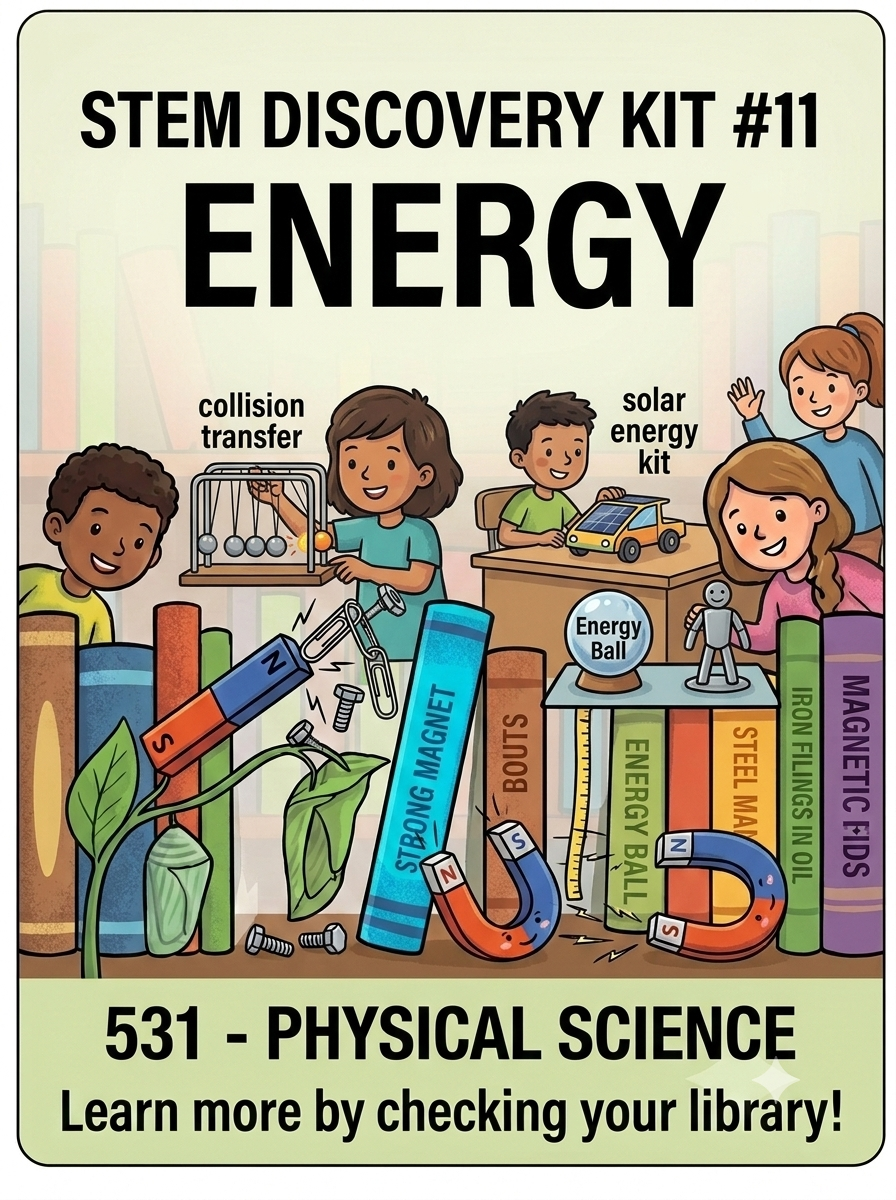
Explore physical science concepts, collision transfer, and energy transformations with STEM Kit #11! Equipped with hands-on tools like Newton’s Cradle, hand crank generators, Energy Balls, solar-powered cars, and a balancing Steel Man, students investigate potential, kinetic, electrical, and mechanical energy systems. Funded by an LSTA Grant to strengthen media center resources and teacher capabilities across SEDC districts, this kit directly aligns with Utah SEEd Standards 7.4.2 and 8.2.1.
Dewey Decimal Topic: 531 – Physical Science
STEM Kit #12: Molecules and Atoms
STEM Kit #12: Molecules and Atoms

Explore the microscopic building blocks of our universe with STEM Kit #12: Molecules and Atoms! Designed for interactive, hands-on student exploration, this kit features Happy Atoms, magnetic Snatoms, and ball-and-stick molecular model kits alongside engaging non-fiction texts. Students can develop models to visualize atomic structures, compare simple molecules to complex polymers, and discover chemical bonding patterns aligned with Utah SEEd Standard 8.1.1. Developed to enhance media center learning opportunities, this kit was made available to regional educators through generous LSTA Grant funding for librarian development.
STEM Kit #16: Animal Skeletons & Comparative Anatomy
STEM Kit #16: Animal Skeletons & Comparative Anatomy

Uncover the hidden internal structures of the animal kingdom with STEM Kit #16: Animal Skeletons & Comparative Anatomy! Designed for interactive, hands-on student investigation, this kit features an LED light table, a 16-piece animal X-ray set, preserved animal skeletons in 360-degree clear acrylic blocks, and engaging non-fiction titles like Bone by Bone and Book of Bones. Students act as anatomy detectives to examine skeletal adaptations, compare homologous structures, and analyze how bone shape relates to movement and survival, aligning with Utah SEEd Standard 4.1.1. Developed to enhance media center learning opportunities, this kit was made available to regional educators through generous LSTA Grant funding for librarian development.
STEM Kit #17: Chick Life Cycle Exploration
STEM Kit #17: Chick Life Cycle Exploration

Step inside the hidden world of avian development with STEM Kit #17: Chick Life Cycle Exploration! Designed for interactive, hands-on student exploration, this kit features realistic chick embryo growth models detailing the 21-day incubation journey, Montessori chicken life cycle figurines, an egg candler, flash cards, and engaging books like Where Do Chicks Come From? and Let’s Hatch Chicks! Students examine biological growth patterns, sequence developmental stages, and investigate basic survival needs in alignment with Utah SEEd Standards K.2.1 and 3.2.1. Developed to enhance media center learning opportunities, this kit was made available to regional educators through generous LSTA Grant funding for librarian development.
STEM Kit #18: Solar System Explorers
STEM Kit #18: Solar System Explorers

Journey into our celestial neighborhood with STEM Kit #18: Solar System Explorers! Designed for hands-on student exploration, this kit includes the Science Can Interactive Talking Solar System planetarium projector, tactile solar system bouncy balls, space flash cards, trivia board games, and engaging guides like The Young Astronaut’s Guide. Students develop models to investigate planet scale, order, planetary characteristics, and orbital mechanics in alignment with Utah SEEd Standard 6.1.3. Developed to enhance media center learning opportunities, this kit was made available to regional educators through generous LSTA Grant funding for librarian development.
STEM Kit #22: Gears & Simple Machines
STEM Kit #22: Gears & Simple Machines
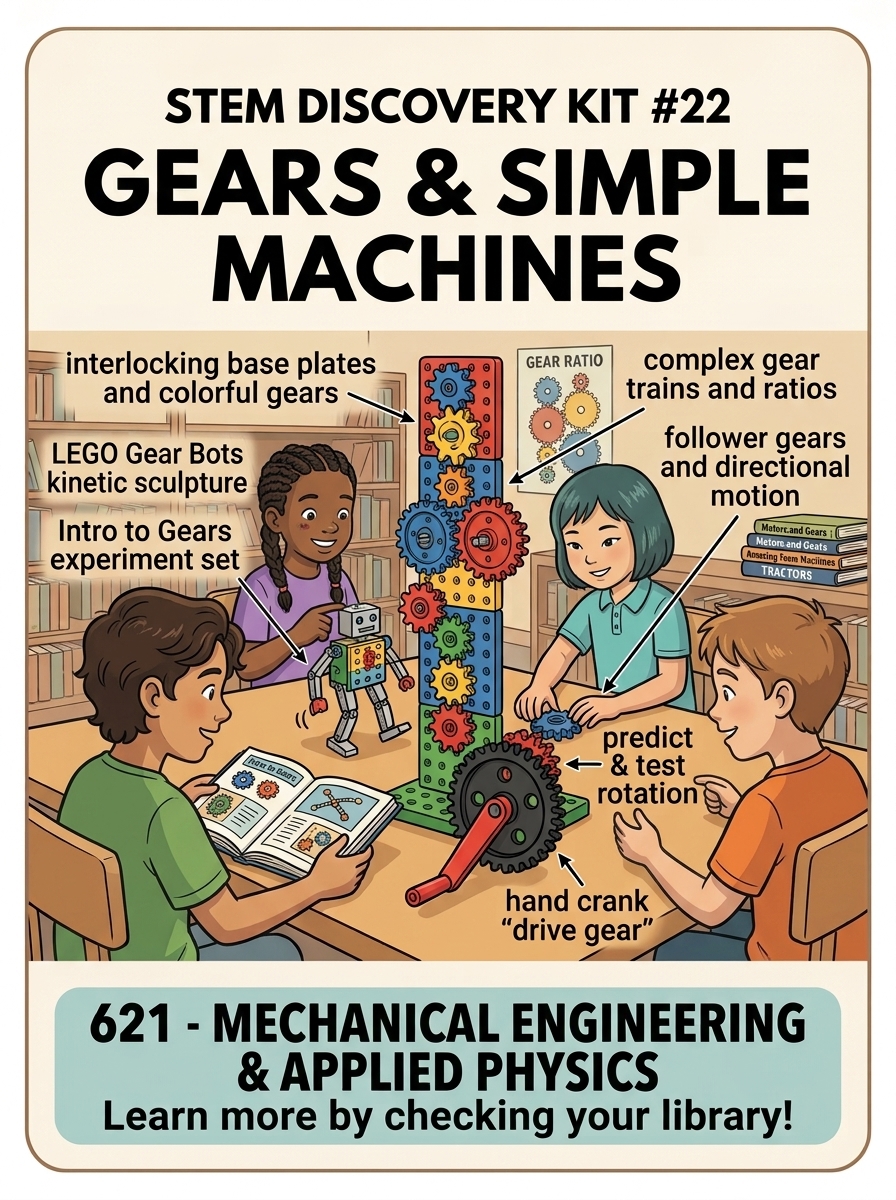
Investigate mechanical motion, torque, and force transfer with STEM Kit #22: Gears & Simple Machines! Designed for interactive student discovery, this hands-on kit includes the Klutz LEGO Gear Bots set, Thames & Kosmos Kids First Intro to Gears experiment set, and Learning Resources Gears! Gears! Gears! Robots In Motion set, alongside books such as Motors and Gears, Amazing Farm Machines, and Tractors. Students build kinetic gear trains, analyze rotational directions, and test gear ratios in direct alignment with Utah SEEd Standards K.3.1, K.3.2, and 3.3.1. Developed to enhance media center learning opportunities across Southwest Utah, this kit was provided to regional educators through generous LSTA Grant funding for librarian development.
STEM Kit #23: Mammals & Animal Classification
STEM Kit #23: Mammals & Animal Classification
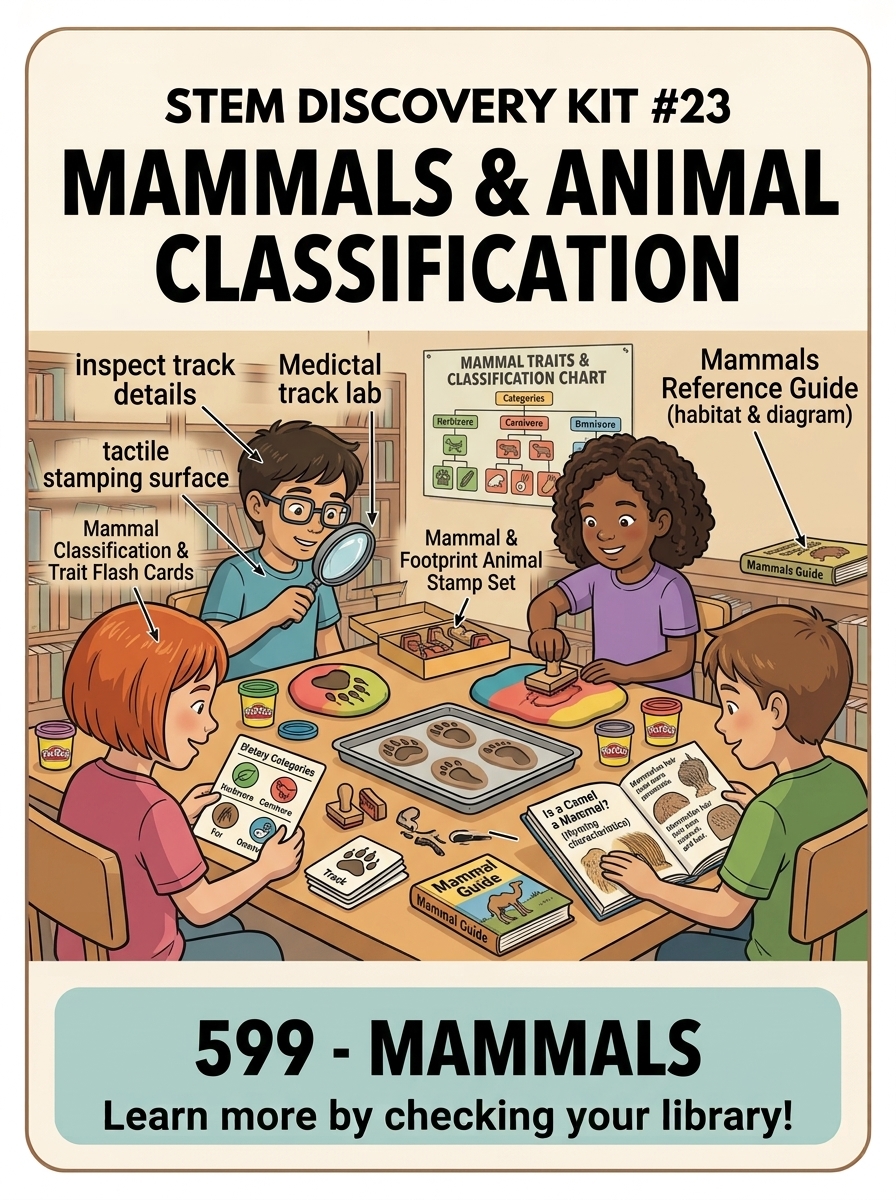
Investigate mammalian traits, footprint structures, and physical adaptations with STEM Kit #23: Mammals & Animal Classification! Designed for hands-on student discovery, this kit contains a mammal and footprint stamp set, Play-Doh modeling tubs, classification flashcards, and magnifying lenses, alongside non-fiction books such as Is a Camel a Mammal? and the Mammals Guide. Students press animal track impressions, analyze foot structures, and evaluate inherited mammalian characteristics in direct alignment with Utah SEEd Standards K.2.1 and 3.2.2. Developed to expand media center learning opportunities across Southwest Utah, this kit was provided to regional educators through generous LSTA Grant funding for librarian development.
STEM Kit #24: Electricity & Circuitry
STEM Kit #24: Electricity & Circuitry
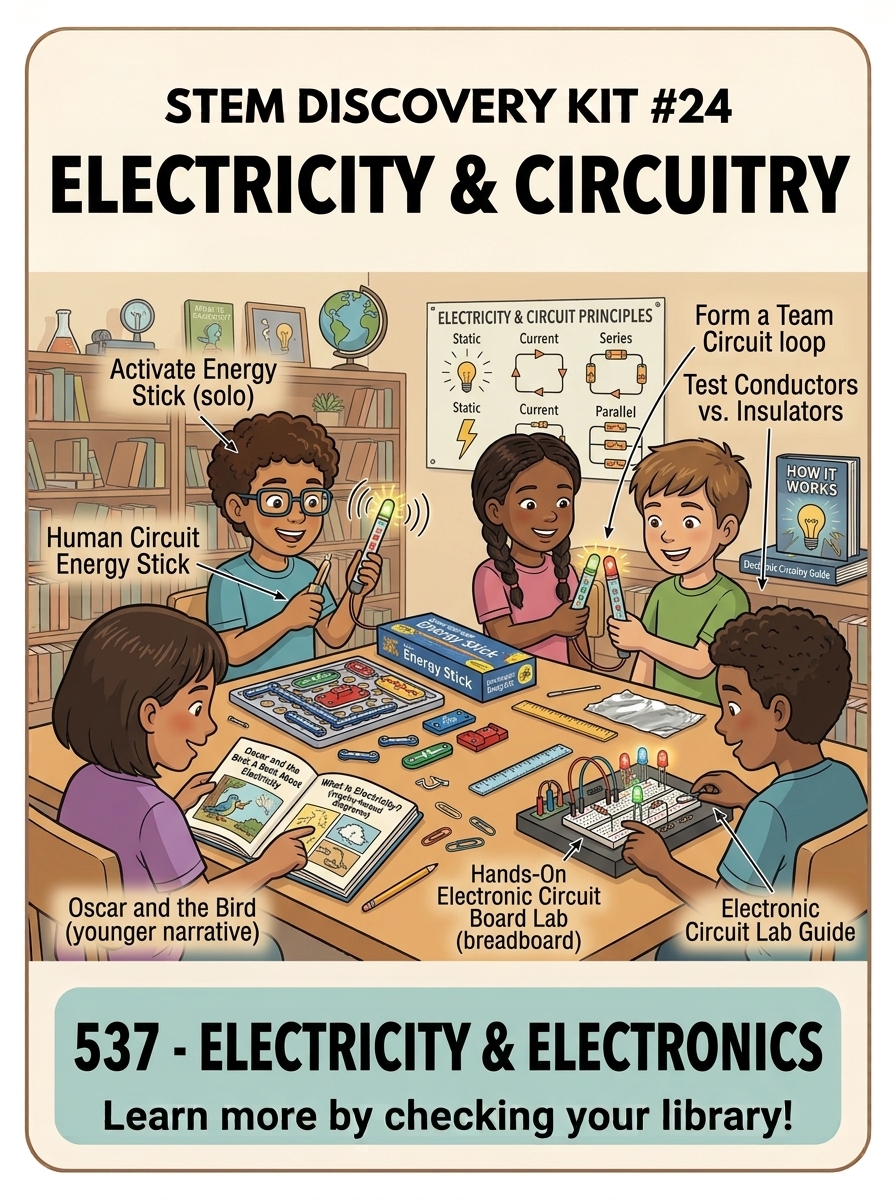
Discover electrical currents, energy transfers, and circuit design with STEM Kit #24: Electricity & Circuitry! Designed for engaging student discovery, this hands-on kit includes Snap Circuits Educational sets, Steve Spangler Human Circuit Energy Sticks, and breadboard circuit sets, alongside books like Oscar and the Bird, What Is Electricity?, and How It Works: Electricity. Students build functional closed loops, test conductors versus insulators, and explore energy transformations in alignment with Utah SEEd Standard 4.2.3. Developed to enhance media center learning opportunities across Southwest Utah, this kit was provided to regional educators through generous LSTA Grant funding for librarian development.
STEM Kit #25: Human Anatomy
STEM Kit #25: Human Anatomy

Explore the complex, interacting subsystems of the human body with STEM Kit #25: Human Anatomy! Designed for hands-on student investigation, this kit features a desktop human skeleton model with detachable parts, an Operation game for testing motor precision and electrical circuits, a dual-head stethoscope, a pulse oximeter, digital stopwatches, and informative non-fiction books like The Human Body Book and See Inside Your Body. Students measure real-time cardiovascular data during heart-rate lab challenges and analyze how skeletal, muscular, circulatory, and nervous systems work together, directly supporting Utah SEEd Standards 4.1.1 and 7.3.3. Developed to enhance media center learning opportunities, this kit was made available to regional educators through generous LSTA Grant funding for librarian development.
STEM Kit #27: Weather, Meteorology & Atmosphere
STEM Kit #27: Weather, Meteorology & Atmosphere

Investigate atmospheric science and weather patterns with STEM Kit #27: Weather, Meteorology & Atmosphere! Designed for hands-on student exploration, this kit features a complete Weather Lab set with an anemometer, thermometer, weather vane, rain gauge, and beaker, alongside a Weatherperson Dress-Up Kit with a microphone and weather map background, meteorology data logbooks, and engaging titles like Everything Weather and Oh Say Can You Say What’s the Weather Today?. Students gather real-time weather data, analyze atmospheric patterns, and deliver live forecast broadcasts in alignment with Utah SEEd Standards 3.1.1 and 6.3.2. Developed to enhance media center learning opportunities, this kit was made available to regional educators through generous LSTA Grant funding for librarian development.
STEM Kit #29: Plants & Botany
STEM Kit #29: Plants & Botany
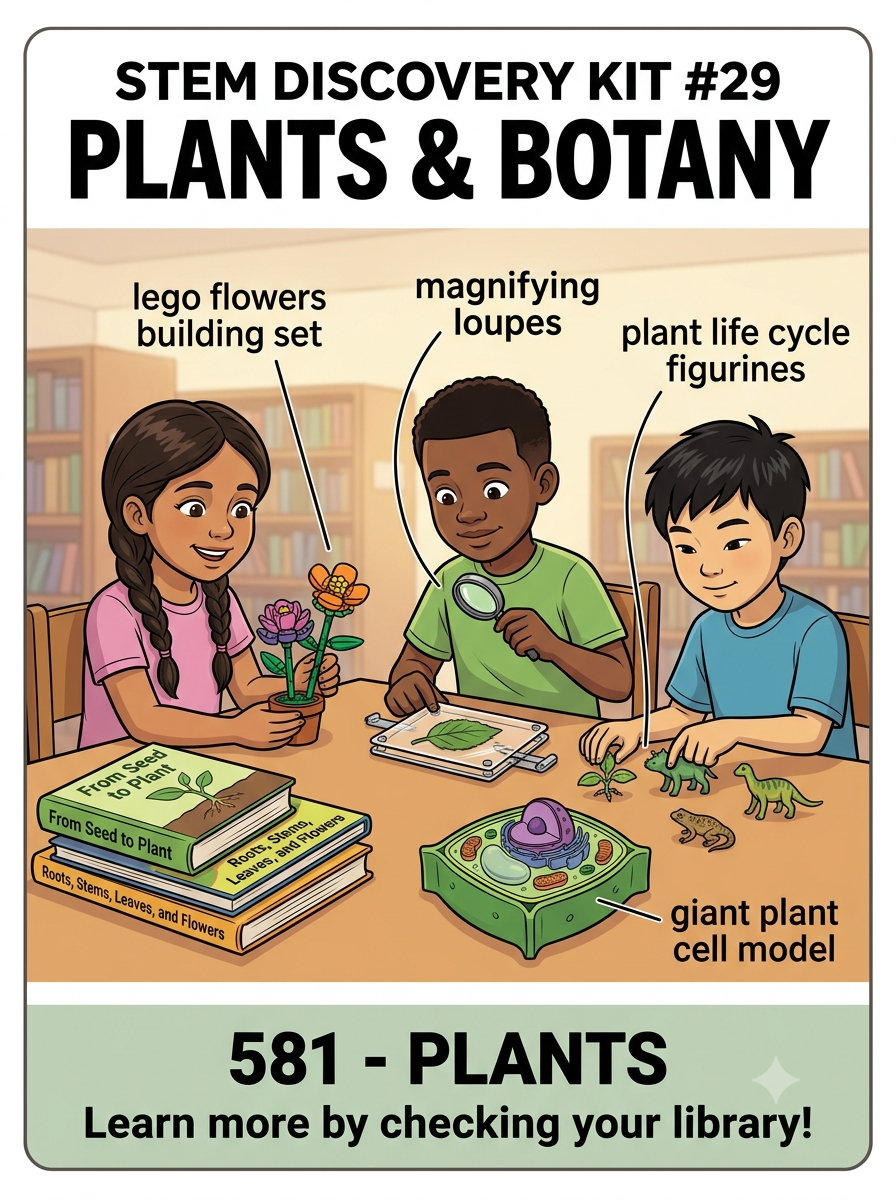
Explore plant anatomy, lifecycle stages, and cellular biology with STEM Kit #29: Plants & Botany! Designed for hands-on student investigation, this kit features a giant plant cell cross-section model, high-power magnifying loupes with an acrylic leaf press, plant life cycle figurines with flashcards, a LEGO flowers building set, and engaging books like From Seed to Plant and Roots, Stems, Leaves, and Flowers. Students analyze plant structures from cellular walls to vascular leaf veins and model how specialized structures support growth and survival in alignment with Utah SEEd Standards 4.1.1 and 2.2.2. Developed to enhance media center learning opportunities, this kit was made available to regional educators through generous LSTA Grant funding for librarian development.
STEM Kit #30: Moon and Sun Phases
STEM Kit #30: Moon and Sun Phases
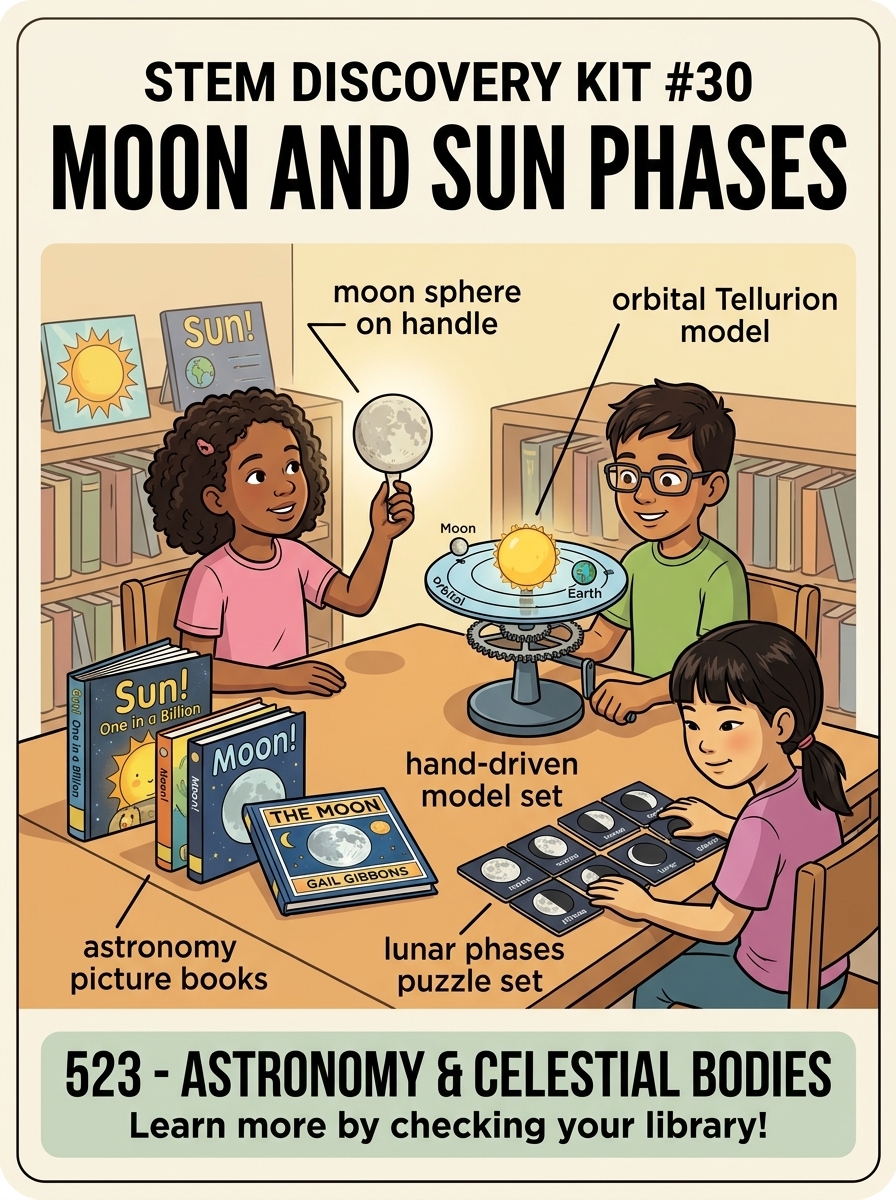
Explore orbital mechanics, light reflection, and shadow patterns with STEM Kit #30: Moon and Sun Phases! Designed for hands-on astronomy discovery, this kit contains a hand-driven Sun-Earth-Moon Tellurion model, a tactile 8-phase lunar puzzle set, and an activity light station with handheld moon spheres, along with engaging titles such as Sun! One in a Billion, Moon! Earth’s Best Friend, and The Moon. Students model lunar cycles, analyze reflective sunlight patterns, and model eclipses in direct alignment with Utah SEEd Standards 1.1.1, 4.4.2, 6.1.1, and ASTR.1.1. Developed to expand media center learning opportunities across Southwest Utah, this kit was provided to regional educators through generous LSTA Grant funding for librarian development.
Technology Kits
Engineering Kits
STEM Kit #5: Engineering and Building
STEM Kit #5: Engineering and Building

Ignite spatial reasoning and structural problem-solving with STEM Kit #5! Featuring the ThinkFun Gravity Maze marble logic game, LEGO bricks, construction toys, and tension rope challenges, students engage directly in the engineering design process and test the physical forces of gravity, tension, and compression. Developed through LSTA Grant funding to expand interactive media center resources and teacher capabilities, this kit directly aligns with Utah SEEd Standards K.3.1, 3.1.2, and 6.1.1. #sedck12
Dewey Decimal Topic: 624 – Engineering
STEM Kit #8: Civil Engineering & Structural Design
STEM Kit #8: Civil Engineering & Structural Design
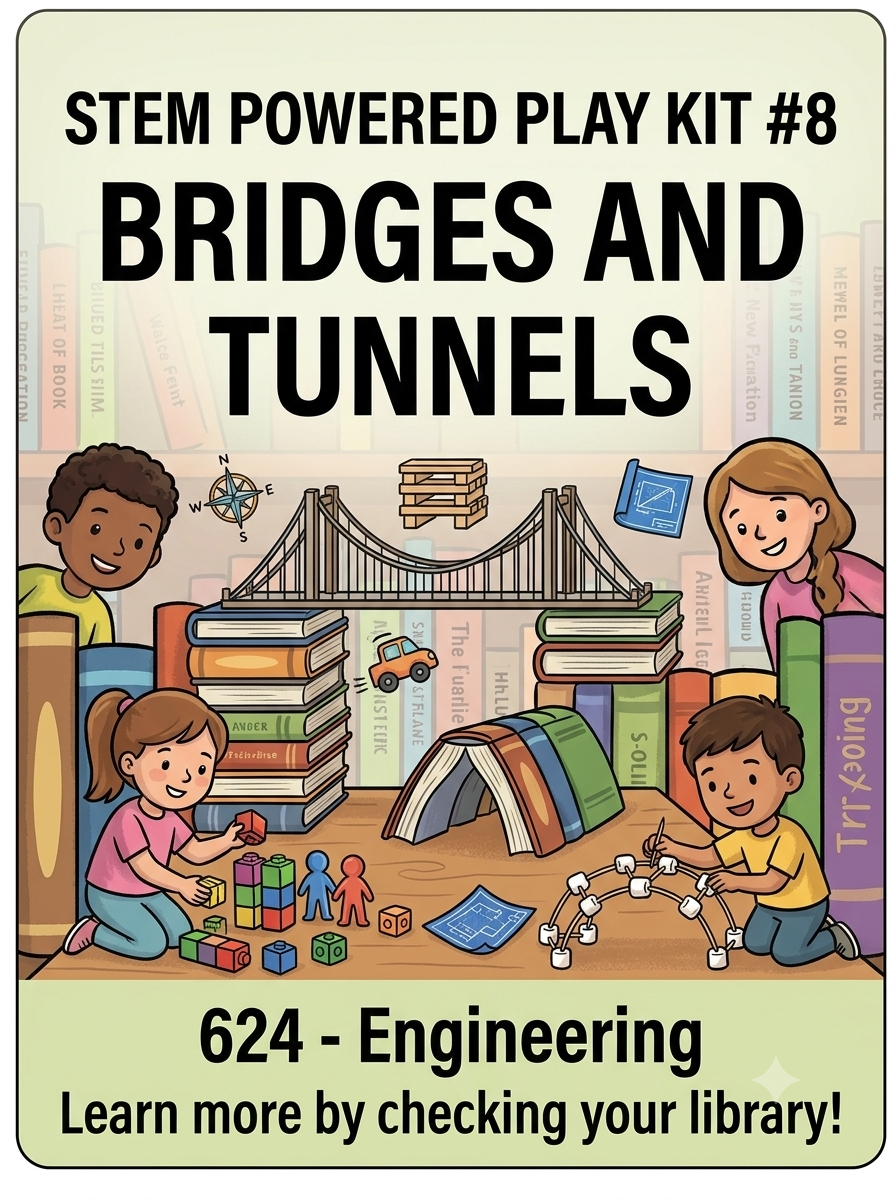
Explore the physical principles of civil engineering and structural stability with STEM Kit #8! Featuring a hands-on Structural Bridge Building Kit, plastic girders, and rich non-fiction texts including Iggy Peck, Architect, students test how geometric shapes like triangles and square frames distribute forces of tension and compression. Developed through LSTA Grant funding to expand interactive library station resources across SEDC member districts, this kit directly aligns with Utah SEEd Standard 6.1.1.
Dewey Decimal Topic: 624.2 – Civil Engineering / Bridge Engineering
STEM Kit #14: Technology & Animals – 3D Printing & Beak Optimization
STEM Powered Play Kit #14: Technology & Animals – 3D Printing & Beak Optimization

Explore how technology aids wildlife conservation with STEM Powered Play Kit #14: Technology & Animals! Designed for interactive, hands-on student exploration, this kit features a 3D printer, historical printing sets, beak simulation tools, and inspiring real-world stories like Karl’s New Beak and Beauty and the Beak. Students act as engineers to test tool structures, analyze functional designs, and model prosthetic solutions for wildlife survival, aligning with Utah SEEd Standards 4.1.2 and 6.4.1. Developed to enhance media center learning opportunities, this kit was made available to regional educators through generous LSTA Grant funding for librarian development.
STEM Kit #26: Coin Engineering & Sorting
STEM Kit #26: Coin Engineering & Sorting
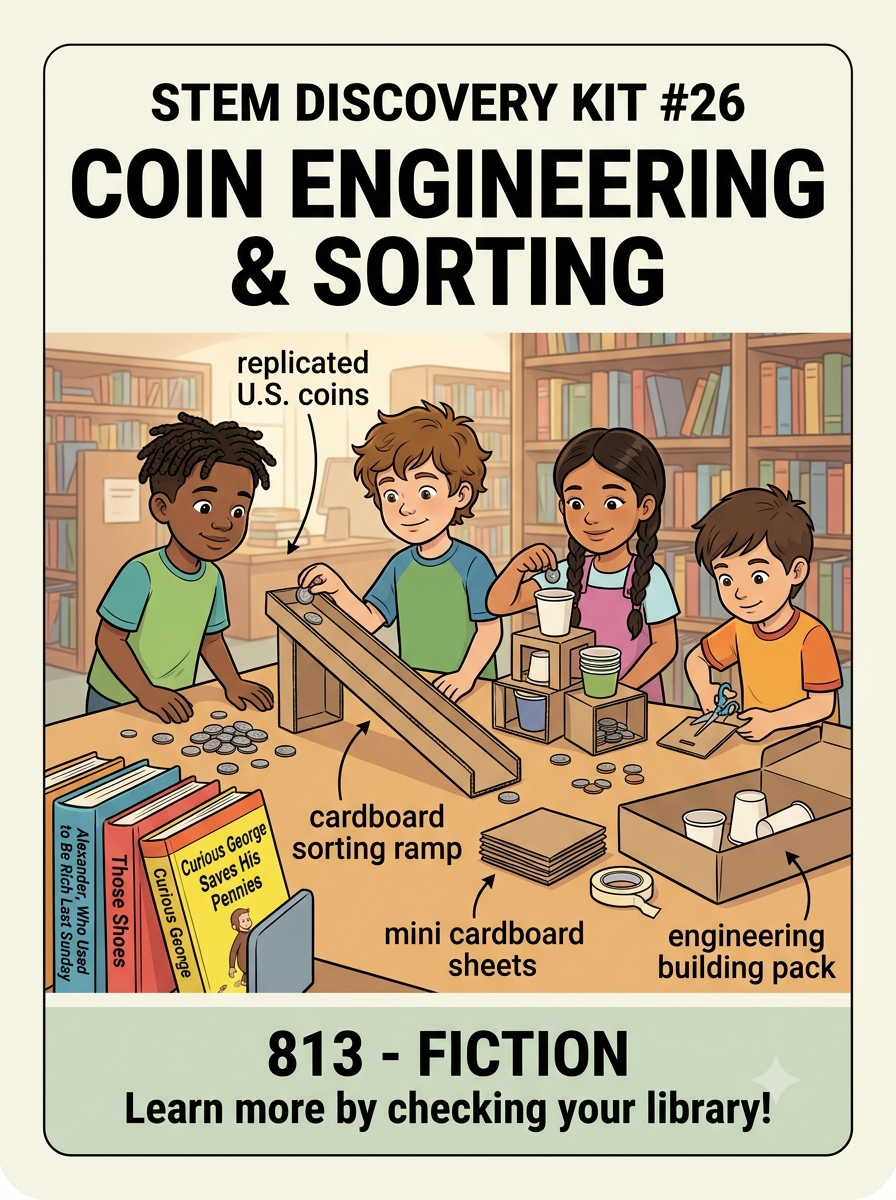
Bridge financial literacy with physical science and design using STEM Kit #26: Coin Engineering & Sorting! Designed for early elementary hands-on student exploration, this kit includes a mixed set of replica U.S. currency coins, sorting cups, clear grid rulers, an engineering building pack with mini cardboard sheets and paper cups, and engaging stories like Alexander, Who Used to Be Rich Last Sunday and Curious George Saves His Pennies. Students examine patterns in physical properties, measure coin dimensions, and engineer custom gravity-fed coin sorting machines in alignment with Utah SEEd Standards K.2.2 and K-2 Engineering Design (1.4.3). Developed to enhance media center learning opportunities, this kit was made available to regional educators through generous LSTA Grant funding for librarian development.
Mathematics Kits
STEM Kit #15: Math Island Adventures
STEM Kit #15: Math Island Adventures

Transform abstract mathematical concepts into hands-on discovery with STEM Kit #15: Math Island Adventures! Designed for interactive student exploration, this kit includes the Math Island board game, colorful fraction tiles, Space Sudoku logic puzzles, calculators, and engaging books like I’m Trying to Love Math and If You Love Sports. Students apply mathematical and computational thinking, model fractional relationships, and analyze data patterns in connection with Utah SEEd Standard 6.4.1. Developed to enhance media center learning opportunities, this kit was made available to regional educators through generous LSTA Grant funding for librarian development.
Coding Kits
STEM Kit #19: Coding & Computational Thinking
STEM Kit #19: Coding & Computational Thinking
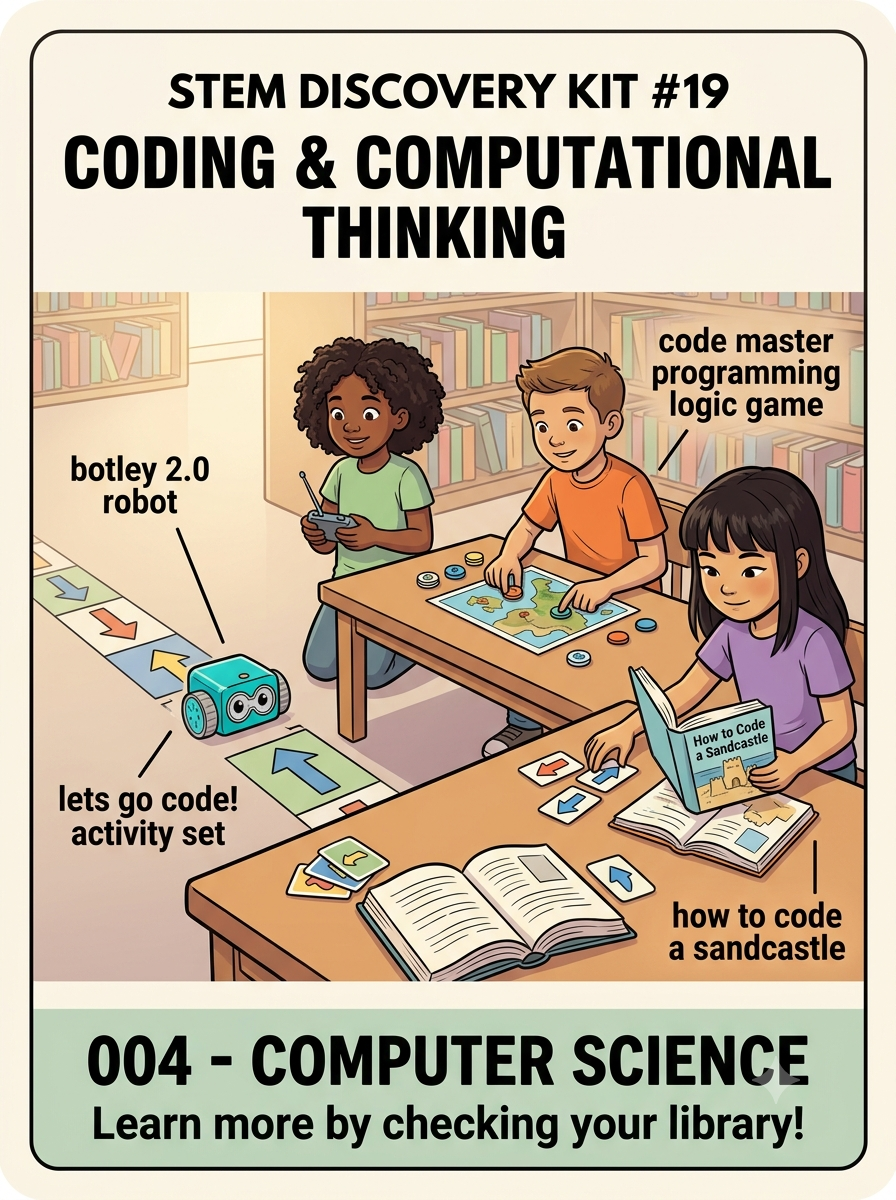
Introduce the language of the future with STEM Kit #19: Coding & Computational Thinking! Designed for screen-free, hands-on student exploration, this kit features the Botley 2.0 coding robot, the Code Master programming logic board game, the Let’s Go Code floor activity set, and engaging books like How to Code a Sandcastle and Hello Ruby. Students deconstruct complex problems, write and test step-by-step algorithms, practice debugging, and explore logic patterns aligned with computational science and engineering design practices in the Utah SEEd framework. Developed to enhance media center learning opportunities, this kit was made available to regional educators through generous LSTA Grant funding for librarian development.
Other Kits
STEM Kit #13: Microscope – The Science of the Miniature World
STEM Powered Play Kit #13: Microscope – The Science of the Miniature World

Discover hidden details in everyday objects with STEM Powered Play Kit #13: Microscope! Designed for hands-on student exploration, this kit features handheld portable digital microscopes, compound microscopes with zoom magnification up to 1600x, prepared slide sets, and step-by-step activity books. Students can investigate microscopic structures ranging from plant tissues and insect parts to fabric fibers, making it an ideal companion for biology studies aligned with Utah SEEd standards. Developed to expand media center learning opportunities, this kit was made available to regional educators through generous LSTA Grant funding for librarian development.
STEM Kit #20: Fairy Tale Problem Solving & Engineering Design
STEM Kit #20: Fairy Tale Problem Solving & Engineering Design
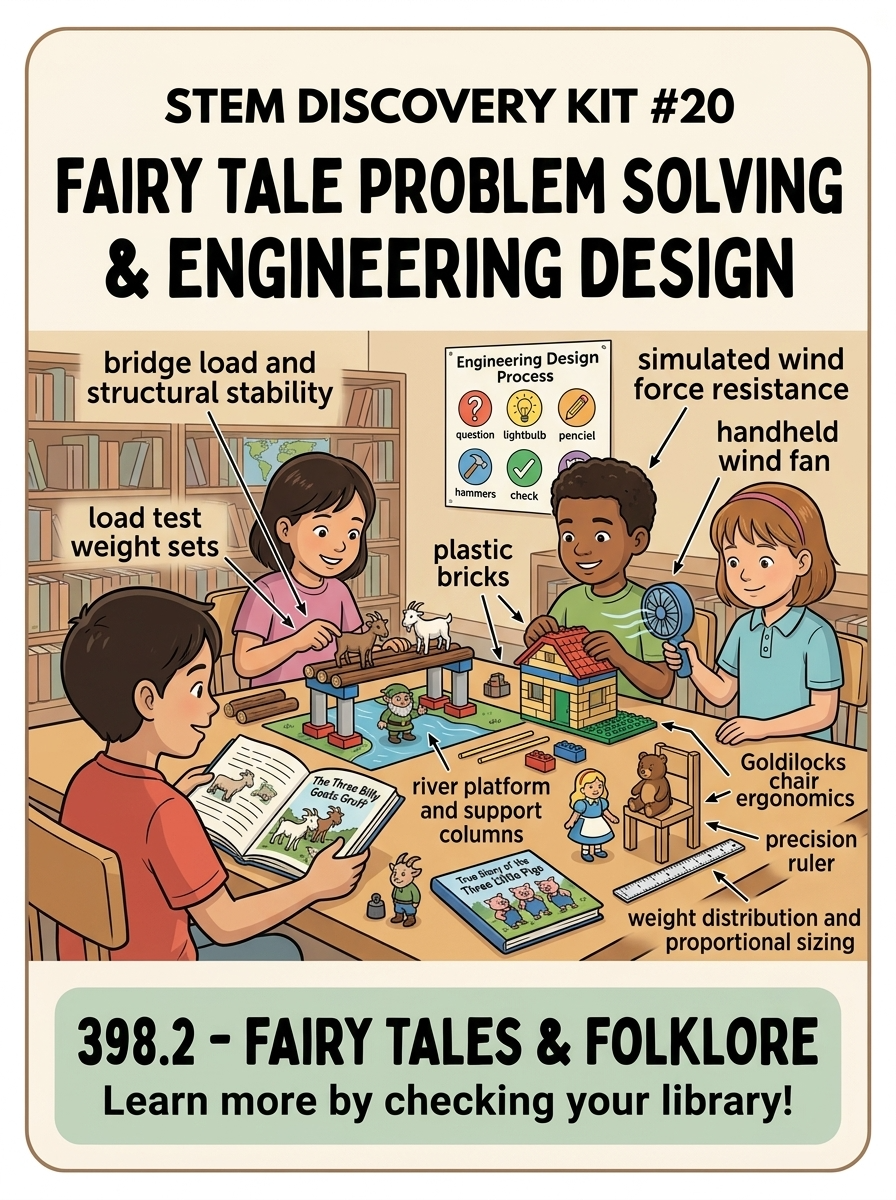
Combine literacy and hands-on structural engineering with STEM Kit #20: Fairy Tale Problem Solving & Engineering Design! Designed for interactive student exploration, this kit features the Lakeshore Fairy Tale Problem Solving STEM Kit complete with building materials, character figures, wind testing fans, and storybooks including The Three Billy Goats Gruff, The True Story of the Three Little Pigs, and Goldilocks and the Three Bears. Students apply the engineering design process to build bridges, wind-resistant houses, and load-bearing chairs, analyzing structure and function in alignment with Utah SEEd Standards K.2.2, 1.2.2, and K-2.ET1.2. Developed to enhance media center learning opportunities, this kit was made available to regional educators through generous LSTA Grant funding for librarian development.
STEM Kit #21: Community & Careers
STEM Kit #21: Community & Careers
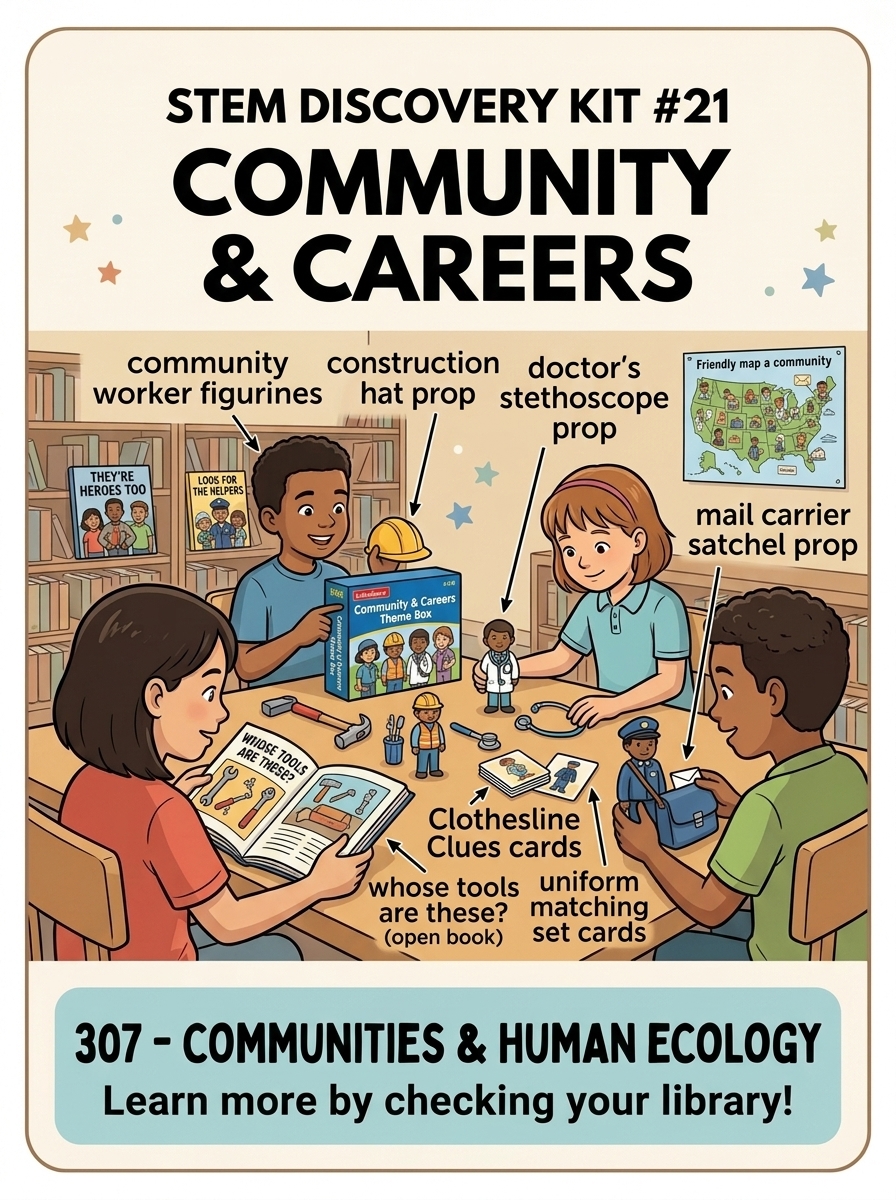
Explore community roles and the physical tools that make them possible with STEM Kit #21: Community & Careers! Designed for engaging student discovery, this kit includes the Lakeshore Community & Careers Theme Box, worker figurines, tool props, uniform matching sets, and featured books like They’re Heroes Too, Clothesline Clues to Jobs People Do, Whose Tools Are These?, and Look for the Helpers. Students examine how specialized design and materials allow helpers to solve real-world problems and keep communities safe, aligning directly with Utah SEEd Standards K.2.2 and 2.1.1. Developed to enhance media center learning opportunities across Southwest Utah, this kit was provided to regional educators through generous LSTA Grant funding for librarian development.
STEM Kit #28: The Physics of Sports
STEM Kit #28: The Physics of Sports
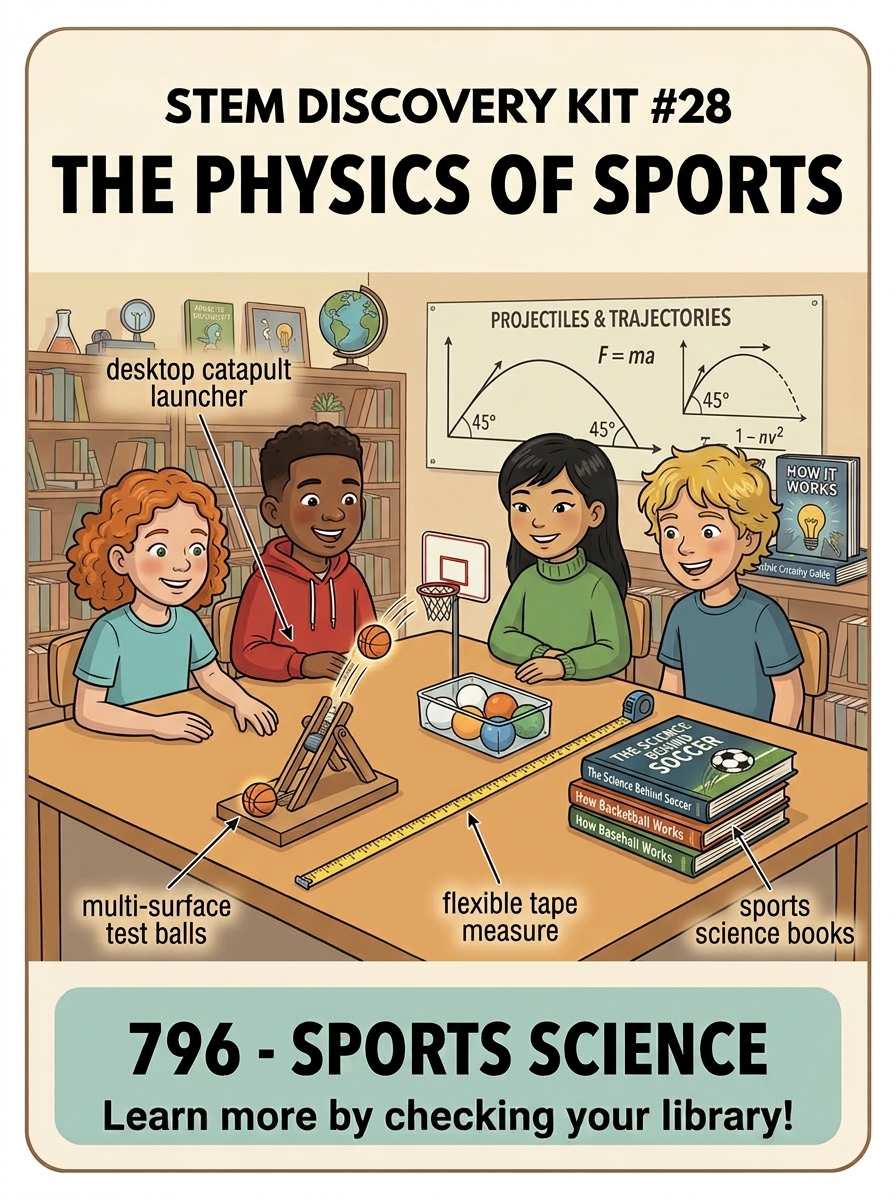
Explore force, momentum, trajectory, and friction with STEM Kit #28: The Physics of Sports! Designed for engaging hands-on exploration, this kit includes desktop basketball and football catapult launchers, multi-surface test balls, and flexible measuring tapes, alongside featured non-fiction titles such as The Science Behind Soccer, How Basketball Works, and How Baseball Works. Students analyze projectile motion, test launch angles, and evaluate force transfer in alignment with Utah SEEd Standards 3.3.1, 3.3.2, 8.2.1, and 8.2.2. Developed to enhance media center learning opportunities across Southwest Utah, this kit was provided to regional educators through generous LSTA Grant funding for librarian development.
STEM Kit #31: LEGO Engineering & Structural Mechanics
STEM Kit #31: LEGO Engineering & Structural Mechanics
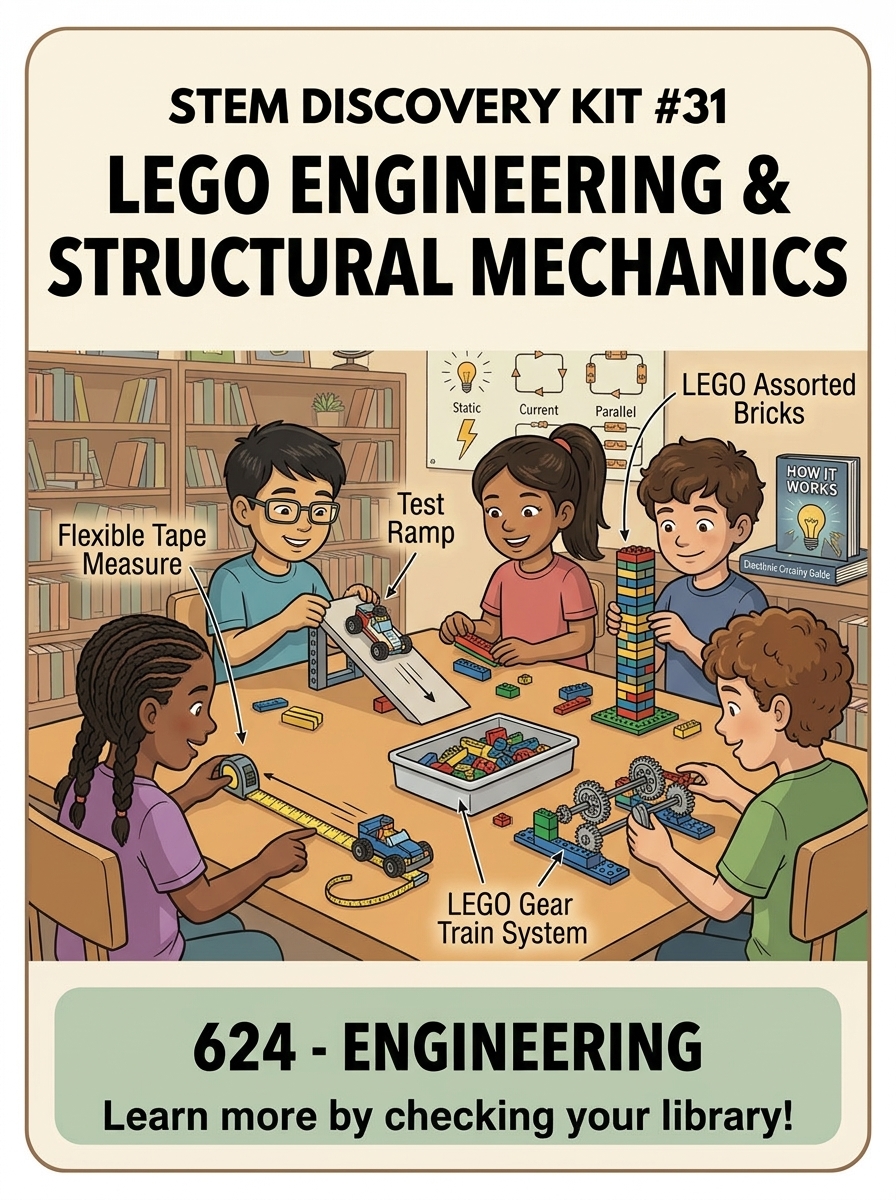
Explore mechanical engineering, structural stability, and gear ratios with STEM Kit #31: LEGO Engineering & Structural Mechanics! Designed for hands-on prototyping and problem-solving, this kit includes LEGO assorted brick sets, LEGO Education Science & STEM components, test ramps, and measuring tapes, alongside titles such as Build It! Things That Go!, LEGO Awesome Ideas, and LEGO 5-Minute Builds. Students engineer four-wheeled vehicles, assemble compound gear trains, and test structural integrity in direct alignment with Utah SEEd Standards K.2.2, 3.3.1, 6.2.1, and 3-5.ETS1.2. Developed to expand media center learning opportunities across Southwest Utah, this kit was provided to regional educators through generous LSTA Grant funding for librarian development.
STEM Kit #32: LEGO for Education: Science
STEM Kit #32: LEGO for Education: Science
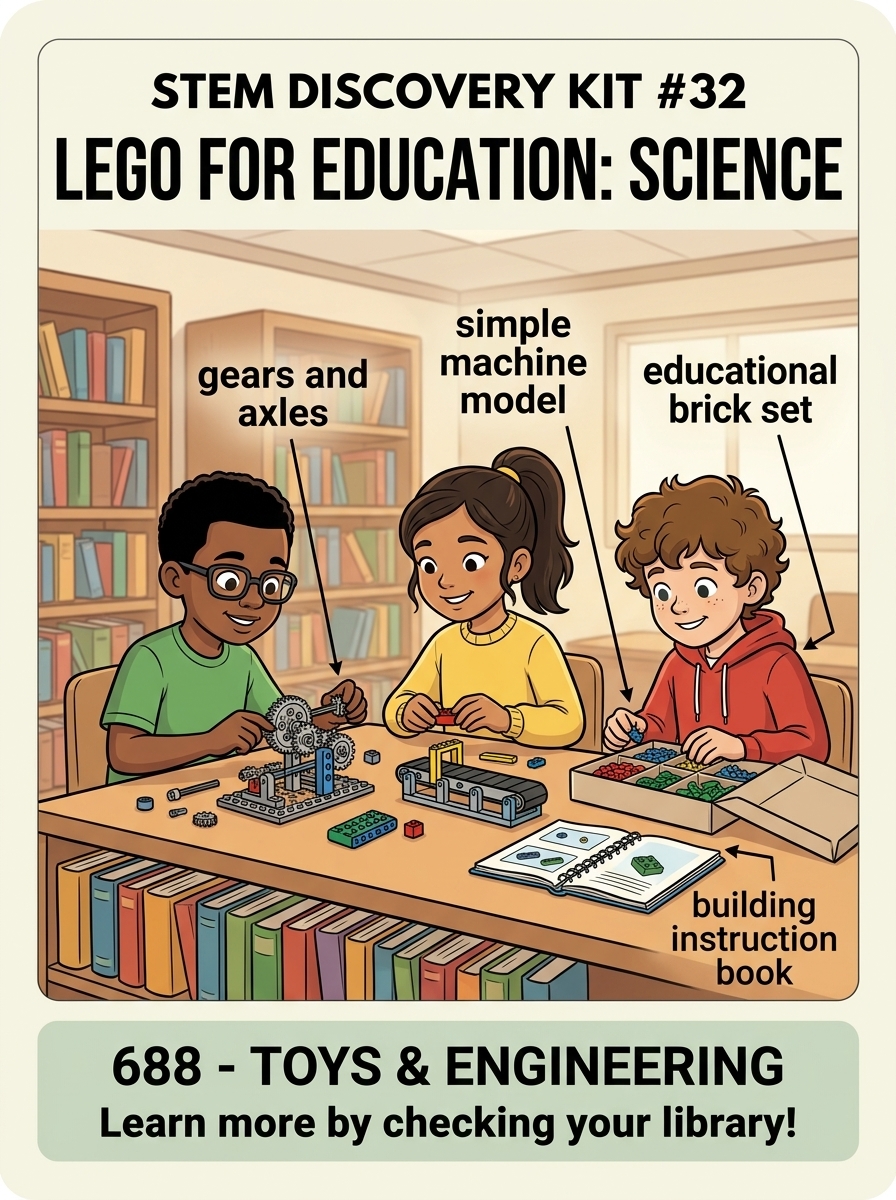
Spark hands-on science inquiry and mechanical discovery across all elementary and middle school grades with STEM Kit #32: LEGO for Education: Science! Designed to facilitate collaborative student exploration, this comprehensive collection features ready-to-use grade-band kits (Grades K–2, 3–5, and 6–8) equipped with 40 standards-aligned lessons, building instructions, and specialized brick sets including gears, axles, and simple machine models. Students build interactive mechanical systems, conduct physical science investigations, and spark creative problem-solving in direct alignment with NGSS and Utah SEEd standards. Seamlessly pairable with STEM Kit #31, this kit was developed to expand media center learning opportunities across Southwest Utah through generous LSTA Grant funding for librarian development.